.svg)




.jpg)


As global consumer awareness peaks during Plastic Free July businesses operating within or exporting to the European Union face a far more pressing, legally binding reality: the impending compliance deadline on August 12, 2026, for the EU Packaging and Packaging Waste Regulation (PPWR). This sweeping, comprehensive legislation effectively transitions packaging into a strictly regulated product category, fundamentally altering how brands design, source, and label their operational materials. For Small and Medium-sized Enterprises (SMEs), failing to adapt to these mandates is no longer merely a reputational risk; it carries immediate, severe legal and commercial consequences, including market access restrictions and substantial administrative fines.
The PPWR mandates a holistic, systemic shift toward a circular economy, but two highly specific provisions require immediate strategic action from packaging procurement teams: strict design mandates for recyclability and the outright prohibition of specific chemical substances of concern.
First, beginning this August, all packaging must comply with rigorous material and volume efficiency rules, severely limiting unnecessary void space and excess material. Looking ahead to the critical 2030 threshold, all packaging placed on the EU market must be fully recyclable, meaning it must be engineered so that its components can be efficiently processed into high-quality secondary raw materials without contaminating existing waste streams. For SMEs currently utilising complex, multi-material laminates such as traditional plastic-coated paperboards his necessitates an immediate, strategic pivot toward mono-materials or advanced water-based barrier coatings that dissolve easily during the pulping process.
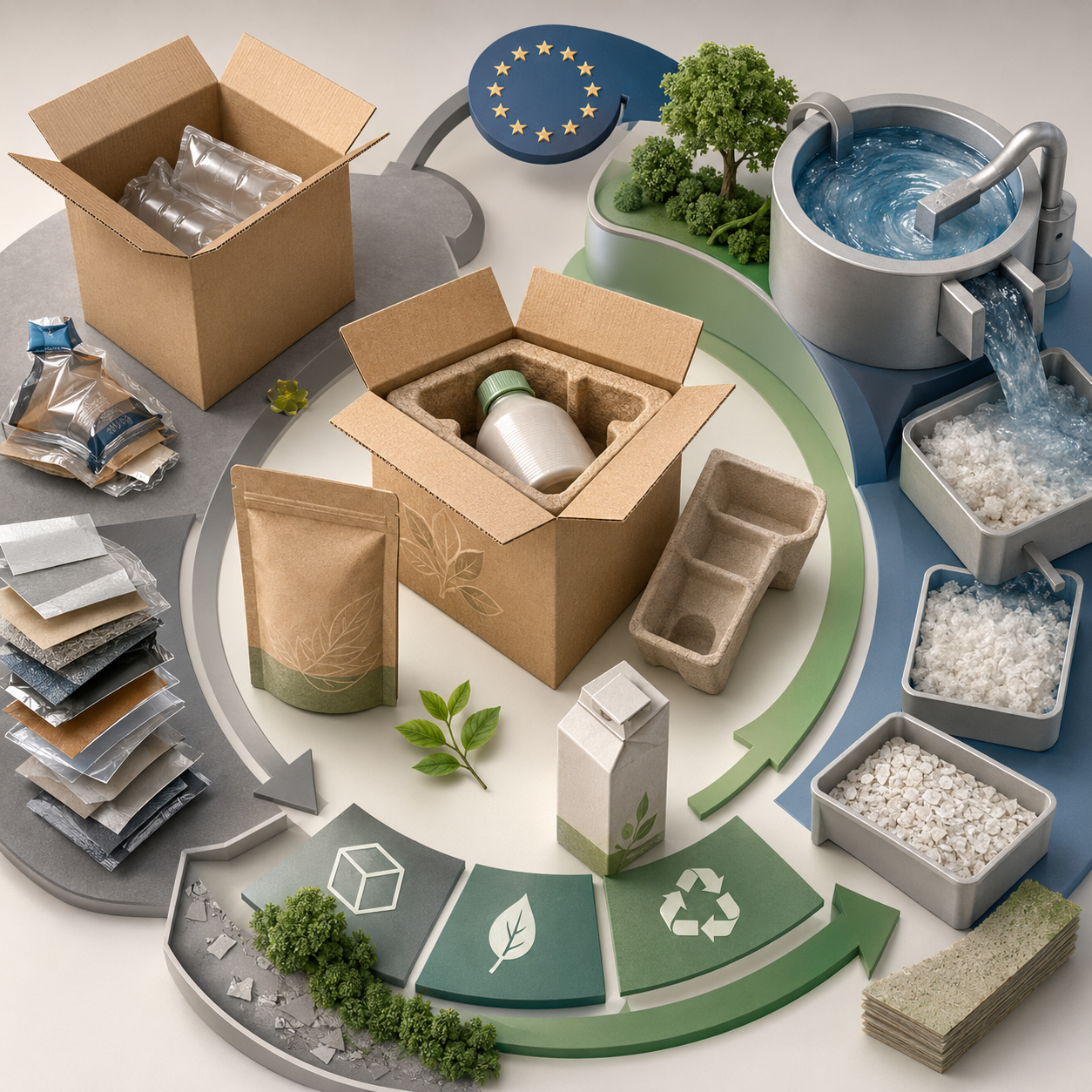
Perhaps the most disruptive and immediate element of the PPWR is Article 5, which introduces stringent restrictions on hazardous substances. Specifically, the regulation aggressively targets Per- and polyfluoroalkyl substances (PFAS), the "forever chemicals" historically used to provide grease- and oil-resistance in fast-food wrappers, bakery bags, and commercial pizza boxes. As of August 12, 2026, food-contact packaging cannot legally contain PFAS above 25 parts per billion (ppb) for any single PFAS compound, or 50 ppm for total polymeric PFAS.
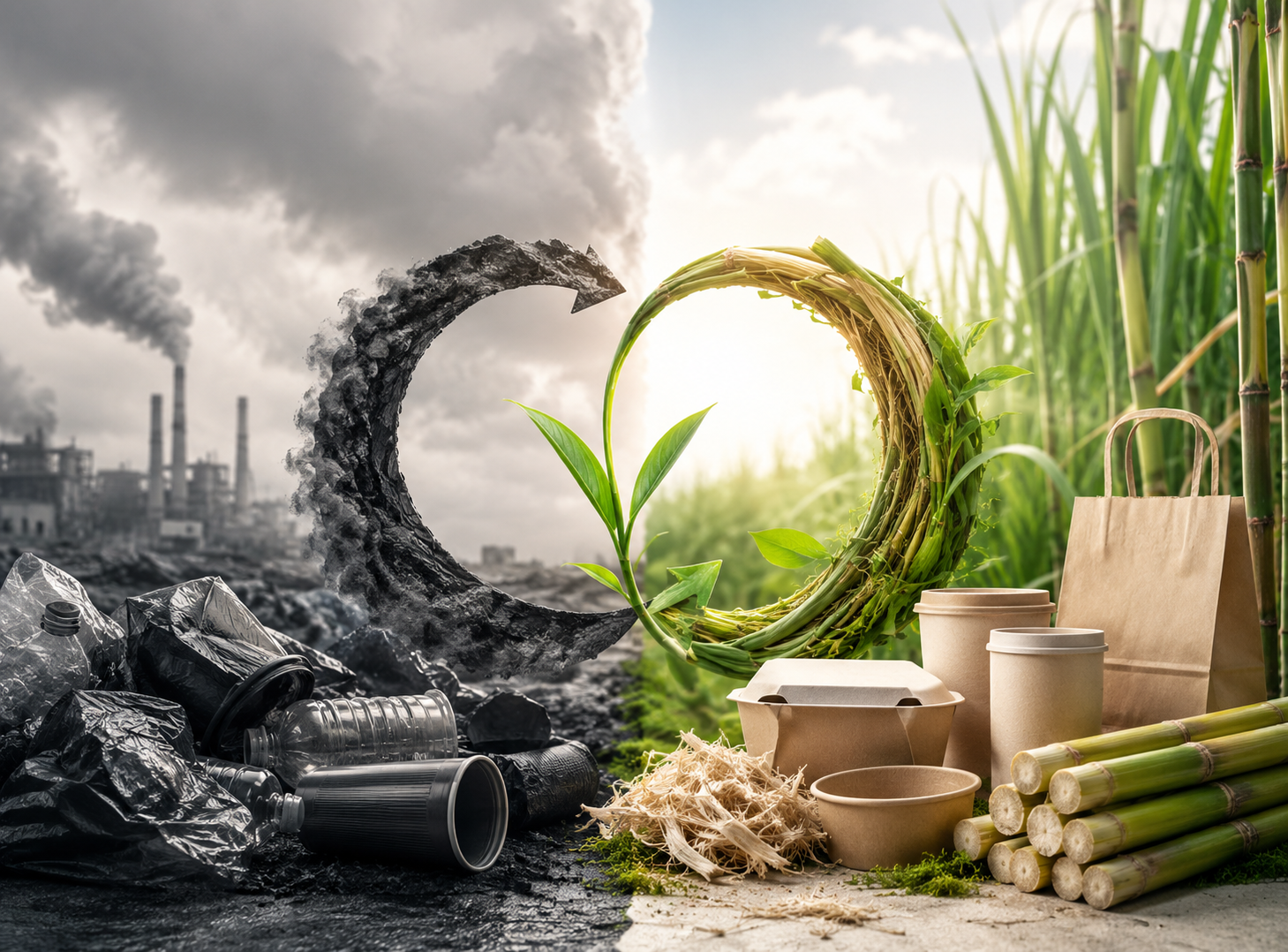
This severe regulatory cliff has catalysed a massive industry transition toward bio-based and agricultural waste fibres. Materials such as sugarcane bagasse naturally possess a highly dense structural fibre matrix that provides inherent grease and moisture resistance, entirely bypassing the need for toxic fluorochemicals. Transitioning to such compliant substrates allows brands to meet the strict Cobb test requirements the standard for water absorbency of the food industry while entirely mitigating the legal liabilities associated with PFAS contamination.
Finally, the PPWR demands unprecedented transparency, mandating the use of digital labelling technologies, such as QR codes, to provide consumers and waste management operators with structured data regarding precise material composition. As the August deadline arrives, SMEs must ensure their packaging is not only plastic-free and chemically safe but backed by auditable, end-to-end supply chain data. The era of unregulated packaging is definitively over; strict compliance through material innovation is now the singular path forward.